
25 | Reset: What Becomes Available When You Choose to Dissolve
~14 MINS READ
WHAT A DIVORCE, A FIVE-MONTH HIKE, AND THE VIEW FROM THE HIGHEST POINT IN THE CONTIGUOUS UNITED STATES TAUGHT ME ABOUT THE INTELLIGENCE OF DISSOLUTION. PSILOCYBIN, NEUROPLASTICITY, AND WHAT YOUR BODY ALREADY KNOWS ABOUT CHOOSING TO DISSOLVE. THE FIRE SUPPRESSION PARADOX AND WHAT HAPPENS WHEN WE REFUSE THE SMALL FIRES. SABBATH, FALLOW FIELDS, AND THE ANCIENT LAW THAT THE SOIL AND THE SOUL FOLLOW. CEREMONY AS RESET. THE DIETA AS CONSCIOUS SHOCK. WHAT THE COCOON KNOWS THAT WE KEEP FORGETTING. HOW TO DESIGN RESETS FROM YOUR NEXT BREATH TO YOUR NEXT CHAPTER. WHY EVERY SPRING REMEMBERS WHAT EVERY EMPIRE FORGETS ABOUT DEATH AND RETURN. AND WHY THE MOST UNIVERSAL RESET OF ALL MAY BE THE RETURN TO LOVE. FAQS RICH WITH FURTHER READING, RESEARCH, AND RESOURCES BELOW.
Your life is not falling apart. It is asking for a reset. The question is whether you choose it or it chooses you.
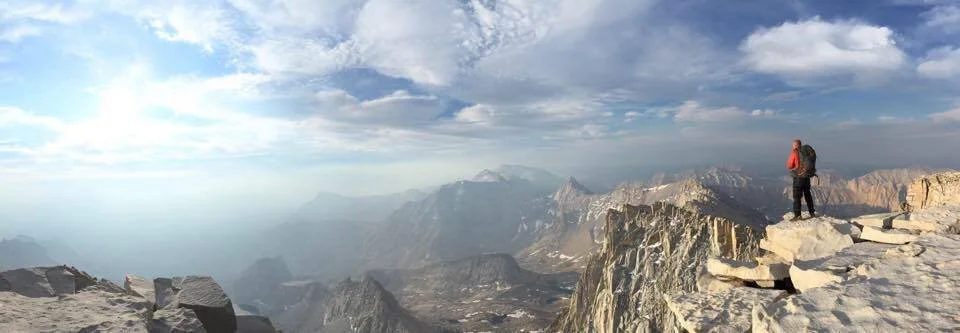
Mount Whitney, 14,505 feet. John Muir Trail, 2015.
The highest point in the contiguous United States. And one of the most intentionally designed resets of my life.
I lay on a flat rock under the stars. The granite was still warm from the day's sun against my back, the cold of the high air pressing against my face. Months of sleeping, night after night under an open sky, and still the body never stops marveling. Sleep did not come. I did not want it to.
Imagine the sky without a ceiling. No haze. No light pollution. No distance between you and the universe. The stars are not above you. They are around you, and the Milky Way pours across the dark like a luminous river you could reach into if you were foolish enough to try.
I watched shooting stars trace their brief, bright lines and disappear. Something beautiful that moves fast and is gone.
The boundary between my body and the granite was becoming less certain, as if the mountain and I had stopped pretending we were separate. As if the whole of my life had been quietly arranging itself to deliver me to this exact place, for reasons I could feel but not yet name.
At sunrise, Death Valley glowed below to the east, the lowest point in North America shimmering beneath the highest. On a clear day, you can see over a hundred and fifty miles in every direction. The Sierra Nevada unfolded around me, wild and ancient. No loneliness in it. A fullness I had never felt with another person.
I prayed up there. Not the kind with sentences. The kind where you open your chest to the sky and let whatever is honest rise. A young man with an old dream, asking to be part of the revolution. To disrupt what no longer serves and help build something rooted in health, harmony, and peace. To find the people already doing the good work and to find my place among them.
A reset is not a vacation. It's a cocoon. A threshold between identities. Every living system on earth already knows how to do it. Somewhere beneath the noise, so do you.
The Gift Inside the Shock
What brought me to this mountain was devastation. I discovered my wife had been having an affair. The marriage ended. A friend offered a guest room, and for months, I treated meditation as a full-time occupation until something emerged that was not grief but direction. The Pacific Crest Trail.
Five months on foot. I saw other hikers occasionally, but the vast majority of my hours were spent in silence. Early on, I stopped sleeping in a tent. Once the walls came down, I could not put them back up. I discovered quickly which fears were mine and which had been installed. Earth became home. I slept wherever the light was most beautiful at dusk, meditated wherever the stillness was deepest, ate where the view was widest, and attended to every human function with panoramas most people would frame on a wall. What I did not expect is what came toward me once I stopped separating myself from the rest of life. This was the first gift the shock had hidden.
The animals came closer. Not all at once, but over weeks, as if the land could feel the walls dissolving. Close enough to touch. A mountain lion watched over me through the night. A black bear stood beside me during a meteor shower, so still I could feel its warmth on my skin. These creatures were so much larger than me that running was never an option. What became an option was surrender. The reset I thought I was making with my feet was actually being made in my nervous system. A hawk circled at the exact moment a question resolved inside me. When I was hurt, a deer found me at a fresh spring after a forty-mile waterless stretch. She walked to me, not away. We stood face to face, breathing together, until something passed between us that I still have no words for.
The ground held me the way it holds everything. I drank from springs and rivers with my hands, and the water tasted the way the earth remembers what we forget. I still return to fresh water to give thanks. To remember where the water comes from. To remember where I come from. Every return to the source is its own small reset.
When you walk for months with nothing but what you can carry, the life you have been defending begins to dissolve. Not violently. Gently. Like fog lifting from a valley. And what is underneath is not emptiness. It is you who was here before the performance began.
I do not have to go back to who I was.
That recognition did not arrive as a thought. It arrived as the body finally exhaling. I am still learning to trust that exhale. I am still learning that dissolution is not loss. It is the body's way of saying yes to what comes next.
The shock was one of the most precious gifts I have ever received. A reset I did not choose, that led to a life I could not have imagined. When clients come to me in their own disruption, they teach me as much as I offer them. A woman navigated the space between careers and discovered the gap she feared was where her real voice had been waiting. A man abstained from dating for a full year and met himself for the first time without performing for a partner. The gift is seldom visible when the shock arrives. Only after.
And yet. I did not know then that this summit would hold a different kind of beginning for me years later. That I would return to this exact place, and that what started there would change the rest of my life.
What that season taught me is that I was not falling apart. I was remembering something my body had always known. I have shared some of it here, but the trail gave me more than any page can hold. If you are curious about the rest, ask me sometime. I save certain stories for when we are sitting together. But every living system already knows what I had to walk thousands of miles to learn.
What Nature Never Forgets
You reset every night. Every time you close your eyes, your brain flushes the debris of the day, prunes overgrown connections, and reprocesses what happened emotionally. Sleep is a daily death and resurrection. You already trust it. You just never thought of it as sacred.
Your heart resets between every beat. Without the pause of diastole, it cannot fill. Your blood is entirely new every four months. Your skeleton replaces itself over a decade. The body that cannot let old cells die becomes cancerous. Your body has been trying to show you this your entire life.
The trees do it every autumn. The snake does it with its skin. The tide does it twice a day. Winter is not a failure of summer. It is the reset that makes the next summer possible.
Every spring is a resurrection. Long before that word belonged to any single tradition, the earth was already practicing it. The equinox, the return of light, the festivals that marked this exact threshold, they all honored the same truth: nothing comes back to life that has not first agreed to die.
I notice this even now, writing these words in Arizona in early spring, the brittlebush already starting to bloom in the Superstition foothills. Something about the desert teaches this more honestly than greener places. Here you can see the bones of the land. Here there is nowhere to hide the cost of never resting.
“To be fully alive, fully human, and completely awake is to be continually thrown out of the nest.”
The Fire Suppression Paradox
Giant sequoias have lived for three thousand years. Their cones require fire to open and release seeds. Their seedlings need bare mineral soil, which only fire clears. For millennia, natural fires swept through these groves every twenty to twenty-five years, resetting the forest floor.
Then we started suppressing fire. A century of good intentions allowed fuel to accumulate to densities these trees had never faced. In 2020, the Castle Fire killed ten to fourteen percent of all living giant sequoias on earth.
I have watched people I work with spend decades suppressing grief, performing wellness, overriding the body's signals with busyness. I have done this too. I am still catching myself doing it, even as I write a post about reset. The pattern is not subtle once you see it. The harder you suppress disruption, the more catastrophic it becomes when it inevitably arrives. I wrote about this in Thresholds, my exploration of what it looks like to fall apart on purpose.
A forest that never burns is a forest waiting to explode. I wonder sometimes whether the same sentence could be written about a life.
What the Soil Remembers and the Soul Forgets
The Jewish Torah opens with a story about creation and rest. God did not rest on the seventh day from exhaustion. The Hebrew shabbat means "to cease." The first thing declared holy in the entire narrative was not a place or a person. It was a pause. The oldest holy days were not commemorations. They were alignments with what the earth was already doing. Over half the world's population traces its spiritual lineage through this text. And yet, most spend their day of rest catching up on what they could not finish during the other six, then wonder why Monday feels like a punishment.
The same tradition commanded that every seventh year, the land itself rest. No planting. No harvesting. Debts forgiven. Our word "sabbatical" descends from this. These authors understood something we have spent centuries forgetting: the soul and the soil follow the same law.
I learned this firsthand studying biodynamic farming at Rudolf Steiner College's Raphael Garden in Sacramento, California. Steiner founded anthroposophy, a philosophy bridging science and spirit, and biodynamic agriculture grew directly from it: farming as a practice of listening to the land rather than extracting from it. He understood that the land is not a machine to be optimized but a living system requiring cycles of rest. A field never allowed to lie fallow stops producing. We have since depleted over half the carbon from the world's cultivated soils. The earth did what the spirit does when it is never given permission to stop. It went quiet on its own terms.
What is true for soil is true for the soul. Some sentences do not need commentary. They need obedience.
The Ancient Architecture of Stepping Away
Every civilization that has endured built formal structures for withdrawal and return. Anthropologist Arnold van Gennep mapped the pattern in 1909: separation, liminality, reincorporation. "The energy in any system eventually dissipates and must be renewed at crucial intervals." That pull you feel to step away, the one you cannot fully explain. This is the architecture your body remembers.
The Oglala Lakota Hanblecheyapi, "Crying for a Vision," is one of the Seven Sacred Rites recorded by Black Elk in his recount of The Sacred Pipe. One to four days on an isolated hilltop. No food. No water. Not waiting for an answer. Waiting for the question to become clear.
The hermits in Egypt known as the Desert Fathers practiced the same principle: "Go, sit in your cell, and your cell will teach you everything." The Japanese practice of kintsugi repairs broken pottery with gold, honoring the crack as evidence that something was reset, not ruined.
A rite of passage is not something that happens to you. It is something you enter. And something I am still entering, in different forms, at different scales, with less certainty and more surrender than when I was young.
“I was standing on the highest mountain of them all. I understood more than I saw; for I was seeing in a sacred manner the shapes of all things in the spirit.”
The Cost of Never Stopping
Seventy-six percent of employees experience burnout. Standard vacations do not resolve it. Rest is passive recovery. Reset is active restructuring, and most people never make the leap.
I experienced this distinction as a Marine. Boot camp is powerful programming, but I question whether to call it a reset. It dismantled one identity and installed another. A genuine reset leads you toward more of yourself, not less. What the military never built is the reverse ritual. Discharge is a rite of passage without the final phase. War After War was my attempt to reckon with what happens when veterans return without a ritual to bring them home.
The most dangerous threshold is the one you do not know you are standing in.
The Dieta: Feeding the Future, Starving the Past
In the traditions I draw from, particularly the Shipibo healers of the Peruvian Amazon, preparation for ceremony includes a period of intentional abstinence called a dieta. Withdrawing from food, information, social connection, sexual physicality, and substances simultaneously. Everything that modulates your baseline. The Fourth Way tradition calls this a "conscious shock." When you withdraw from the known stimuli your system depends on, the old patterns emerge with startling clarity: the realization that you have been medicating with Netflix the same way someone else medicates with whiskey.
I have never owned a television in my adult life. This was not discipline. It was a quiet experiment in selective ignorance, and it taught me more about my own patterns than most of the books on my shelf.
Every time you choose not to feed the old pattern, you feed the new one. I keep relearning this. Not as philosophy. As practice. Today, I am choosing not to feed the pattern that says I need to have this figured out before I can share it.
One of the bravest things a client ever did was give her television to another client for two months around the ceremony. She had been on Xanax, a tranquilizer, for decades. Without the screen, she discovered most of her anxiety was being fed by what she was consuming, not by what was happening in her life. The pharmaceutical became unnecessary. That client's friend still has the television.
“Silence is essential. We need silence just as much as we need air, just as much as plants need light.”
When the Snow Globe Shakes
Many of the people who come to me arrive not fully decided. They are already in between. Something has begun to shift, and they sense it before they can name it. If you are reading this and something in your chest just recognized itself, that is not a problem. It is a beginning.
When they describe the ceremony afterward, they reach for the same language neuroscientist Robin Carhart-Harris's patients used in his landmark 2017 study: "defragged." "Rebooted." "Reset." He describes it as shaking a snow globe. The settled patterns are disturbed, and in the days that follow, the snow can reconfigure. Psilocybin holds the brain in this open state for approximately two weeks. What astonishes me, every time, is how precisely this mirrors what happened to me on the trail. Months of dissolution. And then the slow, deliberate resettling. Nonlocal Consciousness goes deeper into what psychedelic research reveals about the nature of mind.
But the sacrament is one form of reset among many. Not every reset requires a substance. Some require a mountain. Some require silence. Some require the courage to sit in a room with yourself and not reach for anything.
The difference between a reset and an escape is three things: intention, integration, and return. I have confused the two more than once. The trail taught me the difference.
This is why I keep my one-on-one commitments to two or three months at a time. Work together, integrate, reset between seasons. At each review, we look at the type of reset being requested next.
The Spectrum of Reset: How to Begin
There is a principle in physics that changed how I understand everything I have witnessed in ceremony and on the trail. Nobel laureate Ilya Prigogine found that systems pushed to their edge do not simply break. They can reorganize into something more alive. I explored this in Hyparxis. The practice is Self-Remembering, learning to witness your own life as it unfolds. You are already practicing some of what follows. The invitation is to do it on purpose.
Resets exist at every scale.
Between breaths. The pause at the top of an inhale, when the body has not yet decided to release. A slow double inhale followed by an extended exhale. Andrew Huberman at Stanford calls it a physiological sigh. It shifts your state faster than meditation, and you can do it anywhere.
Between words. The silence before you speak. Just long enough to notice whether what is about to come out is habitual or chosen.
Between days. The room before the screen lights up. No screen before bed. Wake without reaching for the phone. Let the first minutes belong to you, not to someone else's urgency.
Between weeks. One day that belongs to nothing productive. No agenda. Walk without destination. The ancients called it Sabbath. You can call it whatever you want. Just protect it!
Between seasons. The way the light changes before you notice the temperature has. A quarterly pause built into your calendar. My Inner Snapshot was how I built that into practice.
Between chapters. When a major life transition arrives, resist the impulse to fill the space. Design deliberate emptiness between what was and what will be. The emptiness is not wasted time. It is where the new life takes root.
“Not till we are lost, in other words, not till we have lost the world, do we begin to find ourselves.”
What I Found When I Stopped Looking
I have sat in monasteries and meditation halls. Spent weeks in silent retreat and months on trails. Unplugged from technology for stretches long enough that the sound of my own thinking became unfamiliar. Studied with teachers whose names carry weight and teachers no one would recognize.
The depth of a reset has almost nothing to do with the prestige of the teacher, the reputation of the center, or how far you traveled to get there. The most transformative experiences of my life were those in which I brought the least agenda and the most willingness to be with what was already there.
A reset does not need to be expensive or impressive. It needs to be real. Presence, simplicity, and the courage to stop long enough to hear what has been waiting underneath. Everything else is decoration.
I am writing this in my own season of resetting. Caring for aging parents. Sitting with the question of what comes next. I do not have the answer. I am slowly learning that not-knowing is not a failure of the process. It is the process.
The Return
One of the most powerful resets I have ever witnessed was a mother facing the end of her life who chose to write over a thousand poems for her children. One for every occasion she knew she would miss. She was not holding on. She was composing what she wanted to leave behind. That is a reset.
I am planning my next chapter reset. The Camino de Santiago, nearly five hundred miles across Europe. But I also practice the small ones. I breathe before I react. I pause before I speak, though this one still catches me, as I have a tendency to respond in essays when a sentence would do. I have not been protecting my weekly rest, and writing these words is the reminder I needed. The teacher and the student are often the same person!
You do not need a mountain or a monastery. A well-held ceremony can open in a single evening what the trail took me weeks to reach. But the most universal reset may not require a molecule or a mile. It may simply be this: accepting your life exactly as it is, right now, without waiting for conditions to improve. The return to love. Not the feeling. The practice. Again, and again, and again.
If you are reading this the week the Earth crosses back into light, that is not a coincidence. The season is doing what the season does. The invitation is to let it do it in you.
I did return to the summit of Mount Whitney. Years later, under those same stars, on that same granite. And what began there became one of the most important things I have ever been part of. Some resets do not just change your life. They create new ones!
As we reset within, we participate in resetting the world. This is where we reclaim our agency. Not by fixing what is broken out there. By returning to what is whole in here.
The mystery is not what you will find. It is who you will be when you emerge. And that, I have learned, is not something you can plan. It is something you agree to receive.

Questions to Sit With
Where in your life is the shell too tight?
What small fire have you been suppressing that is growing larger in the dark?
Is the reset you need between breaths, between chapters, or between identities?
What would you need to stop consuming before you could hear what is actually asking for your attention?
What version of you is waiting on the other side of the stop you keep postponing?
If you are wondering whether this work might be part of your next step, I suggest starting with my free Ceremony Readiness Guide. If you want to sit with others who are navigating their own thresholds, our online Integration Circles meet monthly.
If this landed, share it with someone whose reset may already be underway.
From my Heart to yours,
Yeshua Adonai
Psychedelic Guide
aboutyeshua.com
Yeshua is a traveling psychedelic guide currently based in Phoenix, Arizona. USMC combat veteran, former diplomat, and serial social entrepreneur devoted to mental health innovation, he has spent decades exploring contemplative traditions worldwide and learning to trust his own experience along the way.
Frequently Asked Questions
-
Rest is passive recovery within the same pattern. You take a vacation, you come back, and within days the same stress returns because the structure that produced it has not changed. Reset is active restructuring: pattern interruption, nervous system recalibration, and often environmental change. Jennifer Moss, who studies burnout, found that time off rarely resolves burnout on its own. What resolves it is changing the conditions, not just pausing within them. I explore this distinction further in Beginning Again.
-
It depends on what you are resetting. A digital fast can shift something in days. A silent retreat begins to settle around day three. Long-distance hiking often produces its deepest effects after the second or third week, which is roughly when the trail stopped feeling like exercise and started feeling like listening. Sabbatical research suggests six months or more for genuine identity-level restructuring. Ceremony opens a neuroplasticity window in hours that may last two weeks. The question is not how long but how willing you are to let the old pattern go.
-
Robin Carhart-Harris's REBUS model proposes that psychedelics relax the precision weighting of high-level beliefs, liberating bottom-up information flow. The Default Mode Network, the brain's autopilot narrator, quiets. Rigid cognitive patterns loosen. A 2024 study in the magazine Nature found that psilocybin produced more than threefold greater changes in brain connectivity than a control drug, and participants' brain patterns became more similar to each other than to their own pre-session baselines. Their neural individuality was temporarily dissolved. Researcher Nico Dosenbach put it plainly: the brains of people on psilocybin looked more similar to each other than to their own unaltered selves. I sit with that finding often. It suggests that beneath all our carefully constructed separateness, something shared is waiting.
-
A concept introduced by Robin Carhart-Harris and Ari Brouwer in 2021. A pivotal mental state is a hyper-plastic window where rapid, deep learning becomes possible, a psychological fork in the road. The critical insight: these states are outcome-agnostic. The same disruption can lead to growth or breakdown depending on context. What determines the direction:
Preparedness and intention
Interpersonal trust and safety
Quality of emotional processing during the experience
Integration support afterward
This is why I never separate ceremony from the work that surrounds it. Pivotal mental states can be induced by psychedelics, near-death experiences, holotropic breathwork, extreme endurance, sensory deprivation, and even the "overview effect" experienced by astronauts viewing Earth from space. The doorways differ. The threshold is the same.
-
A dieta is a period of intentional abstinence before and sometimes after ceremony, involving withdrawal from multiple forms of nourishment simultaneously: physical, informational, social, sexual, and chemical. The five forms are described in the body of this post. The purpose is to create conditions where old patterns become visible and new intentions can root. In the Fourth Way tradition, this kind of deliberate deprivation is called a "conscious shock." Most clients find the information fast, no news, no social media, no entertainment, produces the most surprising results. What you discover when you stop consuming is often more revealing than the ceremony itself.
-
John Welwood coined the term in 1984: using spiritual ideas and practices to sidestep personal emotional work, to shore up a shaky sense of self, or to belittle basic human needs. In the psychedelic space, this looks like chasing peak experiences without integrating past ones, attending ceremony after ceremony as avoidance, or microdosing to cope without addressing root causes. I have watched this pattern and I have lived it. A genuine reset involves confrontation with difficult material, not escape from it. Participants who reported challenging experiences involving emotional difficulty were more likely to report meaningful therapeutic outcomes afterward. The sacrament does not give you what you want. It gives you what you need.
-
The paradox is described in the body of this post through the giant sequoia example. The broader principle: ecosystems managed through fire suppression consistently produced more catastrophic outcomes than those allowed natural burn cycles. The metaphor applies directly to emotional life. Grief suppressed for decades does not disappear. Conflict avoided for years does not resolve. The question worth sitting with: where in your life have you been suppressing a small, necessary fire?
I explored this territory more deeply in Stop Trying to Forgive, my post on what psilocybin and grief teach about why letting go cannot be forced, and in the Grief and the Path Back to Ourselves series, which maps what becomes available when we stop running from loss and let it reshape us.
-
Yes. Christina Maslach identifies burnout as the collapse of three dimensions: emotional exhaustion, cynicism, and personal meaning. It is not caused by working hard. It is caused by working without adequate recovery, purpose, or autonomy. I have seen this in every executive and founder who has sat across from me wondering why the success they built feels like a cage. Recovery timelines vary: mild burnout may resolve in weeks, while severe cases can take six months to two or more years. The body does not lie about how long it has been running on empty.
-
Universally:
Judaism: Sabbath (weekly), Shmita/sabbatical year (every 7th year), Jubilee (every 50th year)
Christianity: Sabbath, Lent, monastic retreat, the Desert Fathers tradition, Ignatian 30-day silence
Islam: Ramadan (annual month of fasting), khalwa (spiritual seclusion), i'tikaf (10-day mosque retreat), Sufi chilla (40-day retreat)
Hinduism: Sannyasa (the fourth life stage of renunciation), Vanaprastha (forest-dwelling withdrawal)
Buddhism: Vassa (3-month rains retreat), Vipassana (10-day silent meditation), Zen sesshin
Lakota: Hanblecheyapi (vision quest, 1-4 days of fasting and prayer)
Aboriginal Australian: Walkabout (up to 6 months of solitary wilderness journey)
Every enduring tradition independently arrived at the same conclusion: the human soul requires periodic withdrawal, dissolution, and return. The soil and the soul follow the same law.
-
During deep sleep, the glymphatic system flushes metabolic waste from the brain, including proteins linked to Alzheimer's disease. Synapses are pruned back to baseline through a process neuroscientists call synaptic homeostasis, restoring the brain's capacity to learn. Up to 75% of daily growth hormone is released during the first period of deep sleep. REM sleep reprocesses emotional memories in the absence of norepinephrine, the stress chemical, offering what amounts to overnight emotional therapy. Matthew Walker calls sleep the single most effective thing we can do to reset our brain and body health each day. Every night, without asking permission, your body performs the very dissolution and return this entire post is about.
-
Apoptosis is genetically programmed cell death. Your body eliminates approximately 50 to 70 billion cells per day through this process, cleanly and without inflammation. Your fingers formed because cells between them died on schedule. Your brain works because half its neurons were pruned during development. When apoptosis fails, when cells refuse to die, the result is cancer: uncontrolled growth. The 2002 Nobel Prize was awarded for discovering the genetic regulation of this process. The metaphor needs no translation: a system that cannot release what has outlived its purpose becomes pathological.
-
Hengchen Dai, Katherine Milkman, and Jason Riis found that temporal landmarks like Mondays, birthdays, and New Year's create measurable surges in motivation. Gym visits increase 33% at the start of a new week. The mechanism: temporal landmarks create psychological distance from your past, imperfect self. Psychedelic ceremony functions as an extraordinarily potent temporal landmark, creating a clear "before and after" in the story of a life. This is part of why the people I work with often describe ceremony as the day their life divided into two chapters.
-
Monastic programs: Deer Park Monastery (Thich Nhat Hanh tradition, Escondido, CA), Abbey of Gethsemani (Thomas Merton's Trappist monastery, KY), Self-Realization Fellowship retreat centers (Paramahansa Yogananda tradition, multiple locations)
Silent retreat: Vipassana/Goenka 10-day courses (donation-based, 170+ centers worldwide), Spirit Rock Meditation Center (Insight Meditation, Marin County, CA), Insight Meditation Society (Barre, MA)
Immersive retreat centers: Esalen Institute (Big Sur, CA), Kripalu Center for Yoga and Health (Stockbridge, MA), 1440 Multiversity (Scotts Valley, CA)
Long-distance trails: Pacific Crest Trail (2,653 miles, Mexico to Canada), John Muir Trail (211 miles, Sierra Nevada), Camino de Santiago (500+ miles across Europe), Appalachian Trail (2,190 miles, Georgia to Maine)
Wilderness programs: Outward Bound, NOLS (National Outdoor Leadership School)
Forest bathing: Japan has certified over 60 Forest Therapy Bases; the Association of Nature and Forest Therapy trains guides internationally
Digital detox: Digital Detox retreats (various locations), or design your own by removing screens for a defined period with intention
-
Not every reset requires months on a trail. Micro-resets are real and researched. A morning practice of silence before the phone comes on. A weekly digital sabbath. A seasonal weekend at a retreat center. An evening walk without earbuds. Even forest bathing for a few hours produces immune benefits lasting a month. The architecture of rest exists at every scale. What matters is intention and consistency. The field does not need to lie fallow for years. But it does need to lie fallow.
And for those ready for deeper work, an intentional psychedelic ceremony with proper preparation and guidance can catalyze in a single day what months of incremental change struggle to reach.
-
Neuroscience of Sleep: Matthew Walker, Why We Sleep. The most accessible and comprehensive book on why your brain requires nightly dissolution to function. Changed how I think about every reset that begins with closing your eyes.
Psychedelic neuroscience: Robin Carhart-Harris, REBUS model (the foundational paper on how psychedelics relax the brain's top-down predictions); Gül Dölen et al.'s critical period research (how psilocybin reopens developmental windows that normally close in childhood); Michael Pollan, How to Change Your Mind (the book that brought psychedelic science to mainstream conversation)
Psychology of transition: William Bridges, Transitions: Making Sense of Life's Changes (the definitive guide to navigating the neutral zone between who you were and who you are becoming)
Contemplative: Thomas Merton, New Seeds of Contemplation (silence as the ground of all real growth); Thich Nhat Hanh, Silence (why the noise you carry inside is louder than any external distraction); Pema Chödrön, When Things Fall Apart (the book I recommend most often to clients entering a reset they did not choose)
Science of emergence: Ilya Prigogine, Order Out of Chaos (the Nobel Prize-winning work on how systems reorganize at higher levels of complexity after disruption)
Sacred traditions: Black Elk, The Sacred Pipe (the Seven Sacred Rites of the Oglala Lakota, including the vision quest); Abraham Joshua Heschel, The Sabbath (a lyrical meditation on why sanctifying time is more important than sanctifying space)
Burnout: Jennifer Moss, The Burnout Epidemic (why rest without restructuring does not resolve burnout); Christina Maslach's three-dimensional model of emotional exhaustion, cynicism, and loss of meaning
Trauma and healing: Gabor Maté, The Myth of Normal (how the culture that makes us sick is the one most in need of a reset); Bessel van der Kolk, The Body Keeps the Score (why the body must be included in any meaningful dissolution and return)
On this blog: Thresholds (falling apart on purpose), Self-Remembering (the practice of witnessing your own life), Psychedelic Preparation (the work that begins before ceremony), and The Shame Addiction (what the body carries when it refuses to let go)
Blog Archive
explore the growing library
-
After the War
- Nov 17, 2025 05 | 11.11: War After War A Veteran’s Battle to Heal
-
Consciousness
- Aug 24, 2026 35 | Beholding: How the Chapel of Sacred Mirrors Returns Your Gaze
- Jun 1, 2026 29 | Leary's Eight Circuits: A Map of Consciousness That Both Frees and Binds
- May 18, 2026 28 | Cancer: The Other Healer in the Room
- Apr 20, 2026 26 | Harvard's Last Psychedelic Intersections Conference: A Practitioner's Review
- Mar 30, 2026 24 | Nonlocal Consciousness: What The Secret of Secrets Reveals About the Nature of Mind
- Mar 23, 2026 23 | Self-Remembering: When the Self Sees Itself
- Mar 16, 2026 22 | Hyparxis: The Dimension Where Real Change Becomes Possible
- Mar 9, 2026 21 | Thresholds: A Psychedelic Guide to Falling Apart on Purpose
-
Finding Purpose
- Jul 13, 2026 32 | Vows: How a Tree Learns to Love the Wind
- Apr 6, 2026 25 | Reset: What Becomes Available When You Choose to Dissolve
- Jan 26, 2026 15 | Beyond Belief: Psychedelics and the Post-Religious Spiritual Path
- Jan 5, 2026 12 | Beginning Again: The Practice of Presence Over Performance
- Dec 1, 2025 07 | Finding Purpose in Midlife: How to Regain Meaning
- Nov 24, 2025 06 | Unlock Leadership Potential With Psychedelic Coaching
-
Psychedelic Path
- Sep 21, 2026 37 | FDA public hearing: The Day the Sacred Was Ruled “Out of Scope”
- Aug 10, 2026 34 | Kaleidoscope: What Is Actually Happening Inside a Mushroom Journey
- Jun 29, 2026 31 | MDMA: Heart Medicine and the Oldest Name for God
- Jun 15, 2026 30 | Ketamine: The Mirror Molecule That Was Always Asking for a Witness
- Jan 19, 2026 14 | Microdosing Magic Mushrooms: A Guide to What Actually Works
- Dec 22, 2025 10 | From Darkness Into Light: Living the Insight
- Nov 3, 2025 03 | Ketamine Therapy Near Me: A Legal Pathway for Psychedelics
- Oct 27, 2025 02 | Arizona’s Psychedelic Awakening: Where Science Meets Soul
- Oct 20, 2025 01 | My Psychedelic Journey: A Path Through the Fog of Depression
-
Sacred Ceremony
- May 4, 2026 27 | Seekers Circle 25-26': Where Preparation Becomes Integration
- Feb 2, 2026 16 | Choosing a Psychedelic Guide: Questions Your Life Depends On
- Jan 12, 2026 13 | Psychedelic Preparation: The Work That Begins Before Ceremony
- Nov 10, 2025 04 | Magic Mushrooms: Remembering the Sacred Intelligence of Nature
-
Shadow Work
- Jul 27, 2026 33 | Bend: A Reckoning with the Feminine
- Mar 2, 2026 20 | The Shame Addiction: What the Body Learns (Part 3 of 3)
- Feb 23, 2026 19 | The Shame Addiction: What the Body Hides (Part 2 of 3)
- Feb 16, 2026 18 | The Shame Addiction: What the Body Carries (Part 1 of 3)
- Feb 9, 2026 17 | Stop Trying to Forgive: What Psilocybin and Grief Teach About Letting Go
- Dec 15, 2025 09 | Grief and the Path Back to Ourselves (part 2 of 2)
- Dec 8, 2025 08 | Grief and the Path Back to Ourselves (part 1 of 2)
- Tools for Integration
trending topics
- psilocybin
- psychedelic integration
- psychedelic guide
- harm reduction
- Arizona
- psychedelics
- integration
- transformation
- Fourth Way
- PTSD
- integration coaching
- letting go
- mental health
- nature
- neuroplasticity
- presence
- psychedelic preparation
- recovery
- self-awareness
- veterans healing
- Gurdjieff
- Long Now
- addiction
- alternative treatment
- becoming
- burnout
- combat veteran
- consciousness
- default mode network
- depression
- emotional healing
- ethics
- grief
- guide selection
- ketamine therapy
- legal
- loss
- magic mushrooms
- masculine and feminine
- mindfulness
- mushroom ceremony
- mystical experience
- personal growth
- plant medicine
- psychedelic healing
- red flags
- relationship healing
- relationships
- rites of passage
- sacred ceremony