
38 | Vigil: A Safety Framework for Psychedelic Care
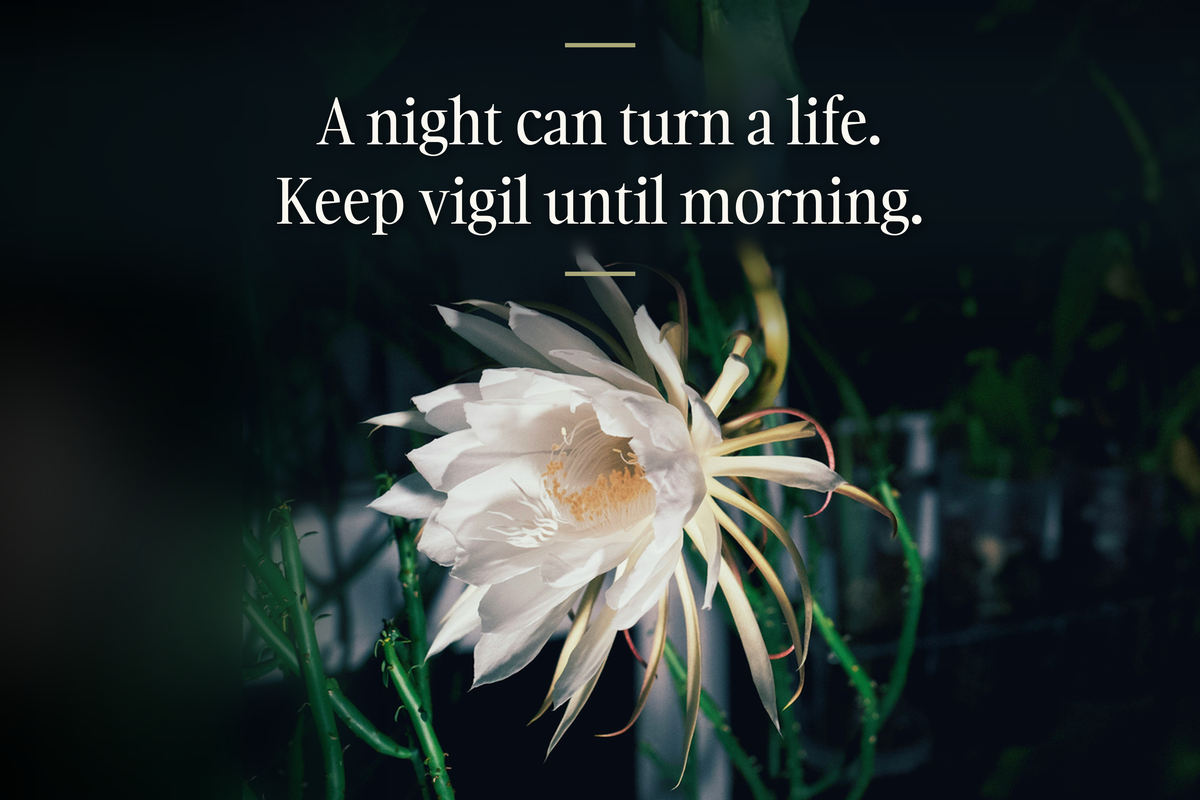
The Queen of the Night opens on one summer night a year, usually in June or July. At Tohono Chul in Tucson, Arizona, the gardeners call the night, and the gates open after dark. The flower keeps no calendar. The gardeners keep it for her.
Three weeks ago, on 14 September, the Food and Drug Administration held a public hearing on the future therapeutic use of psychedelic drugs. Eighty speakers had two minutes each. The hearing asked how to keep a person safe while a psychedelic is working on them: an altered state of consciousness that can last six hours or more, when the mind opens wide, time loosens, and old fear, grief and memory can surface all at once, often in someone no longer able to look after themselves. Then its notice set religious and ceremonial use outside its questions, and with it the sacred, the very experience people so often meet inside that state. My account of that day, Post 37, ended on a diagnosis: no one in the federal system is responsible for a person while they are in that state. Safety in this field has been a potluck where every agency assumed another was bringing the main course.
This letter is the main course, or at least the recipe. Post 37 named the gap. Post 38 lays out what a person in that state needs to stay safe. A safety framework for psychedelic care, written for anyone who builds the rooms: the Agency, the states running programs, the clinics, the retreat centers, the veterans' organizations, the insurers, and the facilitators. When a drug wins approval, the FDA can require its maker to run a safety program called a Risk Evaluation and Mitigation Strategy, or REMS. This page is something else. A framework for every setting a REMS will never reach, kept as a living document and revised as the rules and the research change. A framework covers the session itself, wherever it happens.
Why me. I was a patient the system could not hold. Post-traumatic stress after the Marines, and depression the textbooks call treatment-resistant. Structured heart medicine sessions gave my body its first taste of safety in years, and the mushroom lifted the depression. Now I guide. Near five hundred ceremonies with adults twenty-one and older, thousands of hours of integration after them, and a seat as the integration partner for ketamine clinics. In that seat, I kept meeting the same gap: the dosing day was staffed, and the weeks after belonged to no one. So I am building toward it with the tools of this decade: AI that turns a session into a follow-up in the person's own words, reviewed by a guide, and records built for psychedelic care, like Homecoming, that carry progress across months. Most records in this field point back at the provider. This one turns toward the person. I have a stake in that work, so weigh me accordingly, and I am still learning how best to serve. A Marine, a former diplomat and health care executive, and a mushroom guide walk into a federal docket. The docket is still deciding whether this is a joke.
Who this is for. I wrote this for the FDA's public docket, and I mean it to reach much further. For the state program regulators in Oregon, Colorado, and New Mexico, and the legislators writing the next state laws. For the Department of Veterans Affairs and the veterans' organizations sending people to retreats. For drug developers drafting a REMS, clinic owners, insurers deciding what to cover, training programs, chaplains, hospice teams and harm reduction workers. And for psychedelic facilitators and guides, wherever they practice, so we share a basic standard of psychedelic care to hold ourselves to and to show the people we serve. I have not figured this out. What follows is what near five hundred ceremonies and the guides I have mentored have taught me so far, set beside the research and the rules already written. Take what serves your room, and tell me where I am wrong.
Ground rules. Psilocybin and MDMA sit on Schedule I I. I supply no substance to anyone, ever. This work complements professional care rather than replacing it. Psychedelic experiences are not for everyone. This letter touches dying and thoughts of suicide. Go gently. With that said…
~23 MINS READ · LIVING DOCUMENT, CONTINUOUSLY REVISED
SOMEWHERE TONIGHT A PERSON IS TAKING A PSYCHEDELIC WITH NO ONE AWAKE BESIDE THEM, AND SOMEWHERE A REGULATOR IS DECIDING WHAT THE ROOM AROUND THE NEXT ONE SHOULD LOOK LIKE. THIS LETTER IS WRITTEN TO BOTH. IT BEGINS WITH A CACTUS IN TUCSON THAT FLOWERS ONE NIGHT A YEAR AND A MAZATEC WORD FOR KEEPING WATCH. IT PASSES THROUGH A FEDERAL LAW THAT CALLS A MUSHROOM A DRUG ONLY ONCE IT IS MEANT TO HEAL, AND A HARVARD PSYCHIATRIST WHO CARRIED OUR OLDEST SAFETY IDEA INTO HARM REDUCTION. IT ARRIVES AT A WIDER CIRCLE OF WHO MAY KEEP VIGIL, A HIGHER BAR FOR WHAT THEY OWE, AND A PLACE FOR THE SACRED INSIDE THE RULES RATHER THAN OUTSIDE THEM. BY THE END YOU WILL KNOW WHAT TO ASK OF ANY ROOM, CLINIC OR CEREMONY BEFORE YOU, OR SOMEONE YOU LOVE, WALKS IN.
(The FDA asked the public about four things: how to train the people who give this care, how to keep patients safe, how to make care reachable, and how to collect good data. The five elements below answer all four, and the FAQs map each one, name who else has written a standard, and say where this is weakest.)
Safety with these medicines does not come from the molecule. It comes from who stays awake.
Bloom Night
In the Sonoran Desert there is a cactus most of us walk past fifty-one weeks a year, because it looks like a bundle of dead sticks. The Queen of the Night. Then, one evening in early summer, it opens a white flower the size of an open hand, scented for hawk moths, and by midmorning the sun has wilted it.
At Tohono Chul in Tucson, Arizona, which keeps the largest collection anywhere, gardeners track the buds closely, because the bloom can give as little as six hours of warning. When they call it, the gates open after dark and thousands of visitors walk the trails with flashlights. The plants cannot pollinate themselves, so they open together or not at all.
The detail I keep returning to came from a local reporter. The flower works one night a year. The crew works the calendar.
That is the shape of this work. One long session that can turn a life, held inside months of ordinary care before it and after it. I call that session the night because that is how it feels from inside, though most of my ceremonies run in daylight, from late morning into evening. The night gets the flashlights. The calendar does the healing.
You have had a night like that, mushroom or not. A birth, a death, a hospital corridor at four in the morning. Somebody stayed awake beside you, or no one did, and you remember which.
The bloom lasts one night. The care lasts the year.
“You matter because you are you, and you matter to the end of your life.”
The Oldest Safety Protocol
Long before anyone wrote a regulation, the traditions working with these medicines had solved the central safety problem. It is simple: someone stays awake.
The Mazatec ceremony María Sabina made famous in the West is called a velada, a word built from the Spanish verb for keeping watch. Funerals have wakes. Hospitals have night nurses. Marines have fire watch. Cultures carrying a person through a state they cannot manage alone keep arriving at the same answer. A person.
My own ceremonies run long, and I stay for all of them. Not because a rule says so. The moments when someone in an altered state cannot protect their own interests arrive without a schedule, and the moment they arrive is the moment you learn whether anyone is there.
The federal word for this is monitoring. The old word is vigil. They are false twins. Monitoring waits for an event. Vigil stays for a person. The difference shows at three in the morning, when the one in the room needs a hand and not a reading.
The safety framework starts where the traditions started. Think of who you would want awake beside you on the most important night of your life, and then ask what that person would need: a room, training, a plan for dawn, and somebody checking on them.
What the Name Gets Wrong
The Food and Drug Administration will call these substances drugs, because the law hands it no other word. Federal law defines a drug by intention rather than by nature. A mushroom in a cow pasture is a mushroom. The same mushroom, intended to treat depression, is a drug. The mushroom has not been informed.
The word carries a picture, and the picture is wrong. A drug, in the ordinary sense, is taken daily to manage a symptom for years and counted in refills. Much of the pharmacy shelf works that way, and much of the street does too: relief, numbing, a way out of feeling for a while. I spent years as a patient on the management side of that line, and I do not look down on anyone standing there.
The ones who come to this work are mostly asking for the opposite. Not to feel less. To feel what they could not. A single long night, rarely more than a handful in a lifetime, to reach the wound under the symptom and then go live differently. So my vocabulary differs: the mushroom is a sacrament, MDMA is heart medicine, ketamine is medicine.
A framework does not need agreement on the name. A clinician can say drug. A church can say sacrament. A statute can say Schedule I.
Call it a drug, a medicine or a sacrament. The altered state does not read the label.
What the Syringe Counter Taught
At a syringe counter, public health built a model for meeting reality instead of wishing it away.
For years the case against syringe exchange was simple: a clean needle would encourage the habit. Then the evidence came in. According to the CDC, syringe services programs are associated with about a fifty percent drop in new HIV and hepatitis C infections, and decades of research show no rise in drug use or crime. Participants are five times as likely to enter treatment. Governments partnering with what was already happening kept their residents alive. Governments looking away kept their principles. The same habit put naloxone, a nasal spray that reverses an opioid overdose, on drugstore shelves without a prescription in 2023, and keeps methadone, itself an opioid, in certified treatment programs for people climbing off opioids. The Agency let naloxone off the prescription pad once its maker showed ordinary people could use it safely with no health professional nearby. The rescuer needed competence, not a license.
Harm reduction workers carry a phrase for this: meet people where they are, but do not leave them there.
Harm reduction borrowed its vocabulary from us. Norman Zinberg, a Harvard psychiatrist, took set and setting from early psychedelic research and built it into a theory of how ordinary users keep a substance from wrecking their lives. When harm reduction trainings teach set and setting today, they are quoting our lineage back to us.
A debt is coming due. About eight million Americans took psilocybin in 2024 without waiting for permission, by the federal government's own count. A government can pretend they are not there, or it can make the experiences they are already having safer. What they buy without a door is often not what the label says. Oregon chemists bought twelve mushroom edibles in Portland shops and found psilocybin in none. One of those choices has a track record. Eric Jansen, a Marine veteran, said it from the podium: veterans should not have to be forced to choose between suffering, going underground, or leaving the country and crossing international borders just for standard care.
The hearing split on one question. Does restriction protect people, or price them out? Both sides were arguing about safety. A rule that makes the room safer and empties it has moved the risk outside, to the people who could not pay, where no one keeps vigil. So every requirement in this framework answers to two tests. Does it make the room safer? Does it keep the door open?
Harm reduction is not permission. It is partnership with what is already happening.
“Under very defined conditions, with careful preparation, you can safely and fairly reliably occasion what’s called a primary mystical experience that may lead to positive changes in a person.”
A REMS Is One Door
A REMS, a Risk Evaluation and Mitigation Strategy, is written by a drug company, never by a guide like me, and attached by the Agency to one approved product. Esketamine, a ketamine nasal spray, runs on one today: a certified clinic, the dose taken under observation, at least two hours of monitoring and a stability check before anyone leaves. I work next to it. It proves the Agency can reach past the pill and into the room, and it shows the ceiling, since a program written for one product stops at that product's door.
A REMS does not reach a state program in Oregon, Colorado or New Mexico. It does not reach the hundreds of ketamine clinics, and by my count from clinic partners, fewer than one in six offers integration of any kind. It does not reach a veterans' retreat, a hospice bed, or a psychedelic facilitator, the trained person who stays with someone through a session.
The FDA path is one direction this can go, and I value it. A medical standard will serve a select population well: people with a diagnosis, a clinician and a way to pay, who need what a clinic protects. It is not for everyone. What I hope for is space wide enough to hold all of it: decriminalization, medical treatment with payer coverage, state supported-use models that do not require a diagnosis, and protected ceremonial use. I do not experience those as competing futures. Together they are the broadening of access so many of us have been heralding. In writing this I am not saying the medical model is the best way or the only way. It is a way, it is already happening, and I hope it honors these medicines. In some circles we call them sacrament, because what they open is sacred. In that state some meet their ancestors, some meet the Creator, and some would say they meet their own soul. A pill from a pharmacy does not do that. A rule written for these rooms should carry that weight, whether or not the ones writing it share the language.
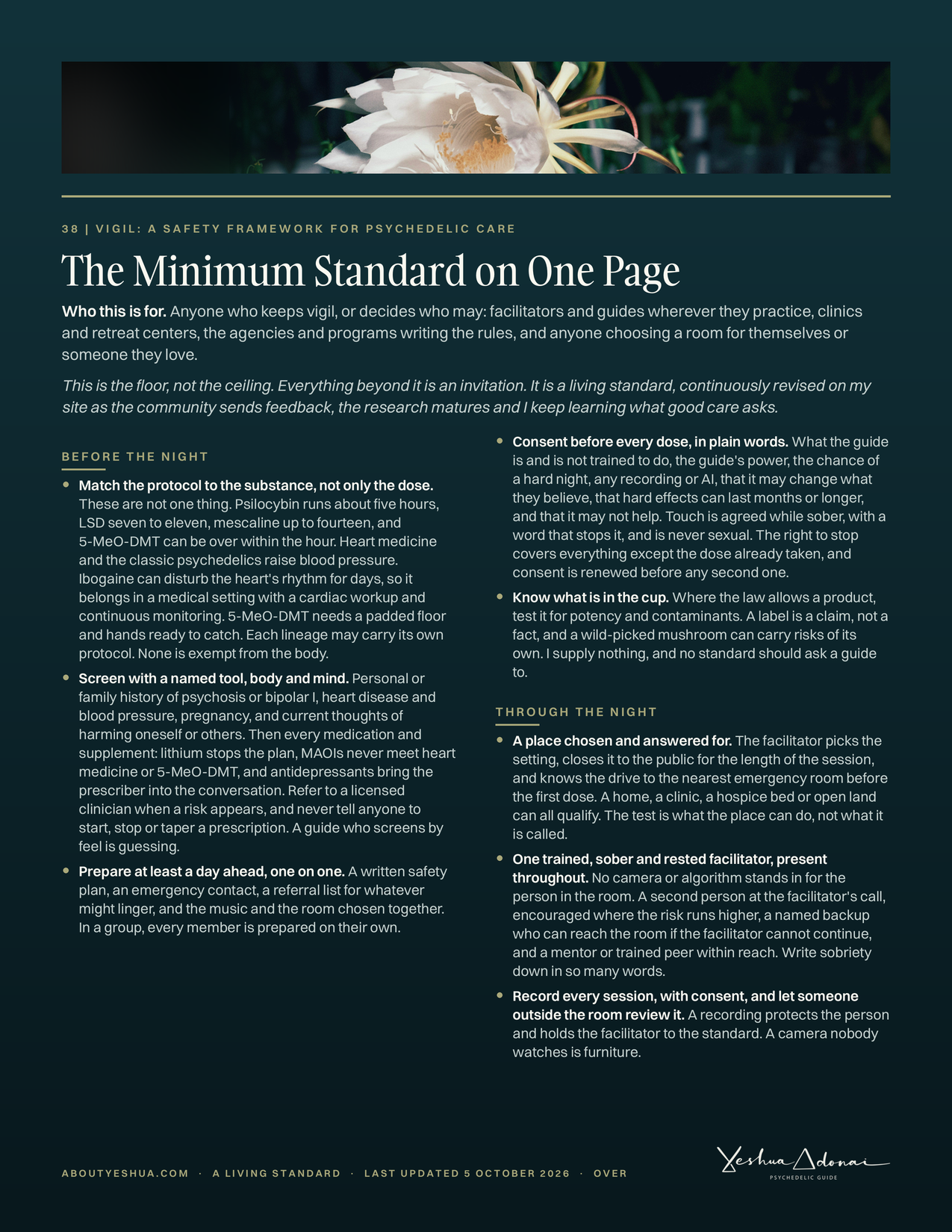
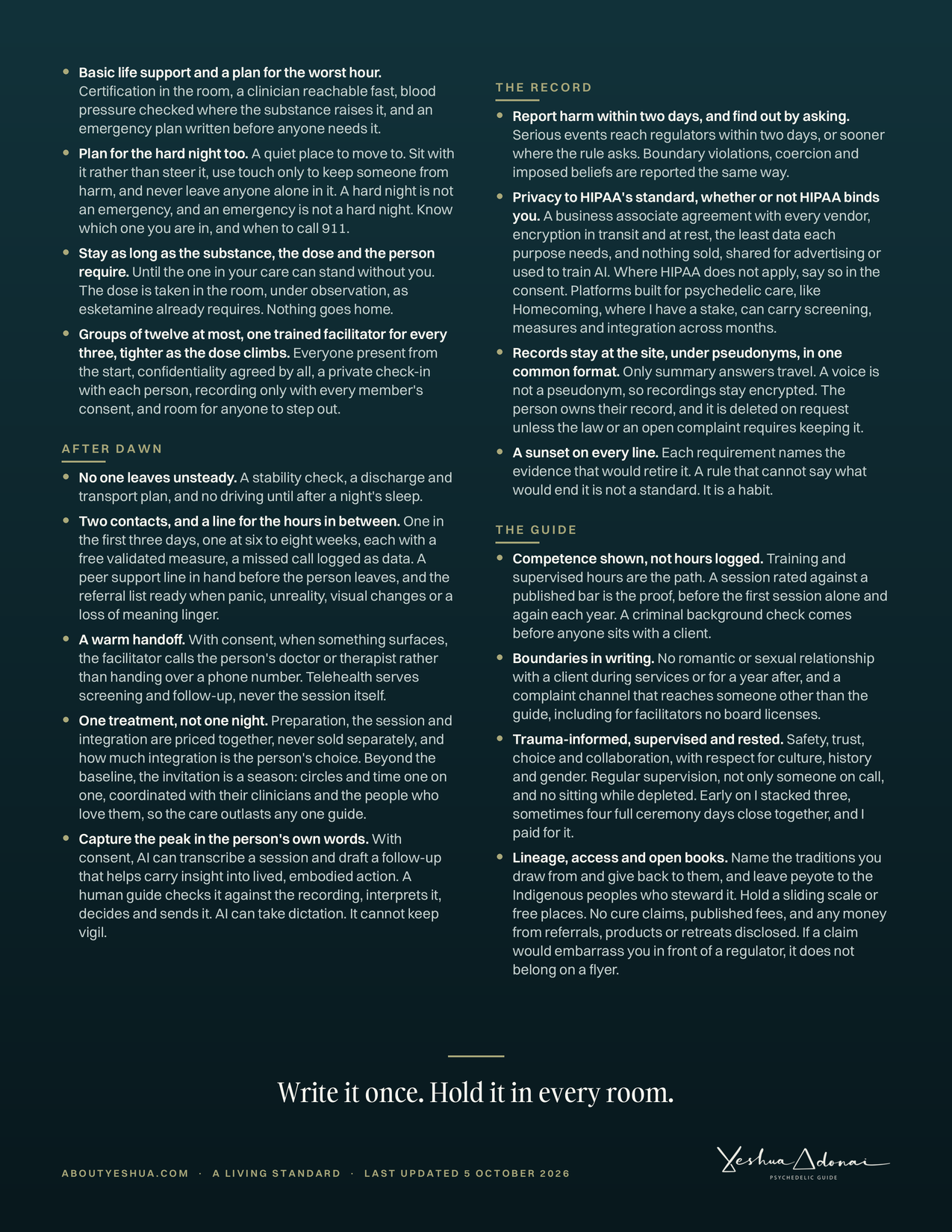
Hence a framework, the second door. Five elements written as a minimum standard any agency, state, clinic or organization can adopt for free, with or without a federal rule. A careful room and a reckless room look identical from outside. A published standard gives the careful ones something to point at.
One product gets a REMS. Every room deserves a standard.
Those five elements are:
The room
The facilitator
The vigil
The follow-up integration
The record
1. The Room
The first thing a person in an altered state needs is the right space, one able to host the work.
Whoever runs the session puts its protocols, staff, emergency plan and records in writing. The facilitator chooses the place and answers for that session, whether a home, a rental or private land in nature. Closed to the public for the length of the session, because a person in an altered state cannot manage a stranger, a passing car or a knock at the door, and should not have to. Written as a list of approved building types, a standard turns into an access rule by accident. Colorado permits a private residence, a hospice, and the home of a participant who is dying, and some of the strongest evidence in this field came from beside a bed in a bedroom.
Let groups be groups. Veterans heal in units. Couples arrive in twos. In a six-couple pilot, couples therapy with heart medicine eased PTSD and lifted both partners' ratings of the relationship. I would encourage more group ceremonies, not fewer. A circle adds a layer of healing no private session can, and much of the alchemy lives in the group's own processing, the moment someone hears their own story in a stranger's mouth and sets it down. Keep a circle to twelve at most, with one trained facilitator for every three people, so twelve means four. One for three sits between the state rules, named in the FAQs, close enough to reach every person in the moment they need it and light enough to keep a circle affordable. Twelve is the size at which every voice can still be heard in the closing circle, and one shared arc still holds: begin together, stay together, end together. Prepare, consent and follow up each one, not only the pair or circle. I’ve led ceremonies over twenty. Larger than I would gather now.
And make a chaplain available at the patient's request, documented as offered. Available, not assigned. Declining costs nothing. Meeting the enormous with no words for it is a safety problem, not a religious one. Medicare has seated a pastoral counselor on the hospice team for decades, and the VA pairs chaplains with clinicians in moral injury groups, so spiritual care has a federal address. A peer-reviewed paper this year set out what a chaplain in this work should be able to do, from a spiritual history before the dose to a non-directive presence during it. The guardrail matters as much as the offer. Matthew Johnson warned this docket about guides drifting into spiritual authority and asked that imposing a belief count as a reportable safety event. I agree. Where I stand: I am working toward that credential myself. A man who asks for a door has told you he may one day walk through it.
We let go where we feel held.
2. The Ones Who Keep Vigil
The second thing is the person in the chair, and how to train whoever sits there.
The minimum is one trained, sober facilitator, present from the moment the dose is taken until the person is steady again. The Agency's final guidance for trials asks for two monitors and a licensed lead, and I would require neither. Requiring two facilitators in every session would double the cost of every hour and put this care out of reach for most of the people who need it. Most people do not need two. Some do, and for them I would encourage it. Someone carrying complex or sexual trauma may need a second presence, sometimes a woman, before they can let go. Serious medical or psychiatric illness can turn fast, and one person cannot stay and call for help at once. A first high dose has no map yet. A group has more people than one pair of eyes can follow. The dying often have loved ones in the room who need tending too.
There are lighter ways to put a second set of eyes on the work. Record every session, with consent, and give the recording to the client afterward. It becomes theirs to return to in integration, and it holds the facilitator to account for every hour, a witness no guide can talk around. Colorado already requires a second facilitator or a recording for any session outside a healing center, and must allow a recording whenever a participant asks. Make the second person a mentor facilitator on call, a seasoned guide able to hold several facilitators at once and reach any of their rooms quickly, the way Oregon keeps a backup facilitator within reach and the Agency's trials keep a physician fifteen minutes away. Or make it a trained peer. Fireside Project, which runs the field's peer support line, asked this docket to "recognize peer support specialists as a defined role in preparation, administration (as a second monitor under clinical supervision), and integration."
Then make competence the standard, not hours. Hours are how a guide gets there, and a state can count them. They are not proof. The person in that chair needs no clinical license, only training, supervised practice and competence shown in front of someone qualified to judge it. Oregon trains and licenses its facilitators without asking for a therapy degree, and New Mexico's proposed rule brings non-clinicians into the session under a practitioner's supervision. The work asks for presence and steadiness, not psychotherapy. Therapists can do it. So can ministers, chaplains, nurses, EMTs, coaches and peer supporters, who already sit with others on their hardest days. The field is saying the same, from the hearing podium to a bipartisan congressional caucus, and the FAQs name them. Write a therapy license into federal or state law and every one of them is out, along with whole regions where clinicians are already scarce. Phase the standard in, rather than weaken it.
Then ask for more than attendance. I have mentored more than a hundred and fifty guides one on one, and most arrived never having sat beside a stranger through a single long night. A certificate cannot tell you who stays steady at hour seven. A rating can. The MAPS adherence manual scores recorded sessions against a published bar and costs nothing. It was also used in the trials whose safety data the Agency found wanting, so it is a starting point, not a guarantee.
Last, give every practitioner somewhere to answer to besides themselves, me included. I spent years sitting alongside other guides, I still answer to a peer consultation network where we hold each other accountable, and I often bring in a peer as co-facilitator, always in group work as well as more sensitive situations. Add a complaint channel and a community of practice, because a guide who is not held cannot hold. A good guide's promise offers no protection against a guide lacking integrity. A structure is.
In a crisis, we look for the calmest person in the room.
3. Through the Night
The third thing is the vigil itself. This is where patient safety lives, while the medicine is working.
Oregon sets a minimum session length tied to the dose, six hours at the highest, and defines continuous monitoring as visual and audio contact throughout. A companion rule says video cannot satisfy it. I would sign that sentence twice. Colorado adds a plainer clock: the session runs until the participant shows no obvious adverse effects.
Write the discharge and transport plan before the session begins, as Colorado requires, while the participant can still help write it. Consent belongs there too, naming the guide's power, the chance of a hard night, any touch. Keep the stability check esketamine uses before anyone leaves.
My ceremonies average over ten hours, because the experience does not consult the rulebook. Whatever the minimum, whoever keeps vigil stays until the one in their care can stand without them.
The strongest objection came from a patient. Jim Dodson, an advocate in New Mexico, asked this docket for a sojourner option, the right to be alone with the medicine, because company in the room kept him from finding his own way through. He may be right for himself. The vigil, then, is a standard of care offered to whoever wants it, staffed and ready, not a rule imposed on everyone.
Nobody wants to face their hardest night alone.
4. After Dawn
The fourth thing is the stretch where most of the healing happens and almost none of the counting does.
The weakness goes first. No controlled evidence shows a conversation afterward prevents harm. A meta-analysis of sixteen psilocybin studies found no significant link between therapy hours and depression outcomes. So the framework treats preparation, the session and the weeks after as one treatment. No program sells the session alone. Every person is prepared before and offered integration after, priced into the session, the way Colorado already bars a separate fee for the first integration session. How much integration is the person's choice. Methadone learned this the slow way: in 2024 the federal rule stopped making counseling a condition of the medicine, so a person can take the help offered without having to earn the dose. What the framework requires to happen, at the least, is ascertainment, a plainer thing: the minimum contact capable of finding out what happened.
The reason is one cohort. Korthuis and colleagues followed 346 adults through twenty-four of Oregon's licensed centers. Of 4 serious behavioral reactions, 2 showed nothing to the facilitator in the room and surfaced only because somebody called later and asked. Three of the 4 fell outside Oregon's seventy-two-hour reporting window, and new thoughts of dying peaked at the last point measured. Oregon's own count points the same way: ten reactions surfaced in the days after release, a window the state now defines in its rules and requires no one to ask about.
Two contacts, then. One in the first three days, one at six to eight weeks, each with a free validated measure, by phone if need be, with a missed call logged as data. As one filer told this docket, missing follow-up is a limitation in knowledge, not evidence that no adverse event occurred. My own practice calls the next day, always within seventy-two hours, then meets by video within the first week and again two weeks after that. Three contacts after a ceremony is the least I do, and I would encourage it for anyone. The standard asks far less, and should. A rule can require the call. Devotion can only be invited.
Those two calls are the baseline, the least any program should owe. Too many practitioners stop there, or close to it: a ceremony, a few integration sessions, a goodbye. What I hope for is more. A community of support, integration circles with others walking the same ground, and time one on one with an integration coach, a therapist, or both. Most of the people I sit with choose to keep going, three more months, sometimes six, sometimes years. I have prepared some people for six months to a year before a single ceremony. The opening is not the work. The months around it are. The aim is not a bond with me. The aim is a life with care built into it, a family, friends and a circle able to hold what the night opened, until they no longer need me in the middle of it.
Some arrive with none of that within reach. Depression narrows the world, and a belief about the self can keep every door shut. Many come to me at the end of conventional care, after it did not reach them, and some no longer trust it at all. I am not a therapist, I do not treat, and I keep the door back to clinical care open. Meeting someone at the end of their rope, and staying, is part of what safety requires.
Tools belong here, and only here. I use them myself to reflect on my own journeys and draft integration plans, and they have helped more than I expected. A tool can hand someone back their own words and turn a night into a plan small enough to do on a Tuesday. It carries no duty, and it will not notice a man going quiet. Available to anyone, required of no one, banned by no one.
A seed needs more than the day it was planted.
5. A Record Worth Trusting
The fifth thing is the record, where a well-meaning system could do more damage than the medicine.
A registry for a Schedule I substance is a list of confessions. In Wilson v. Lynch the Ninth Circuit held a state medical marijuana card alone was reasonable cause to refuse a woman a firearm. The card was the evidence. Every veteran with a clearance will run that arithmetic before walking in. I have screened clients who would not give a last name until the second call, and they were reading their country correctly.
Harm reduction learned this at the counter too. A program that frightens its participants off counts no one. Still, keeping no record is worse. Misconduct hides where none exists.
The design lives inside the Agency. Its Sentinel system leaves records at each site, sends the question out, and brings back only summary answers, across hundreds of millions of patients. Add site-held pseudonyms, and a Certificate of Confidentiality wherever the follow-up runs as research, and no central list of names exists to subpoena. The person's own record, a session recording included, belongs to them. And count everyone. Jean Vélez Rodríguez, a Marine veteran from Puerto Rico, told the panel the national drug-use survey has no sample for the territories and leaves out nearly 3.2 million citizens. "In our hands," he said, "we have a system that wasn't built to see us." The whole minimum standard sits on one page after the sign-off, ready to print.
We tell the truth where it is safe to.
Every Vigil Ends at Morning
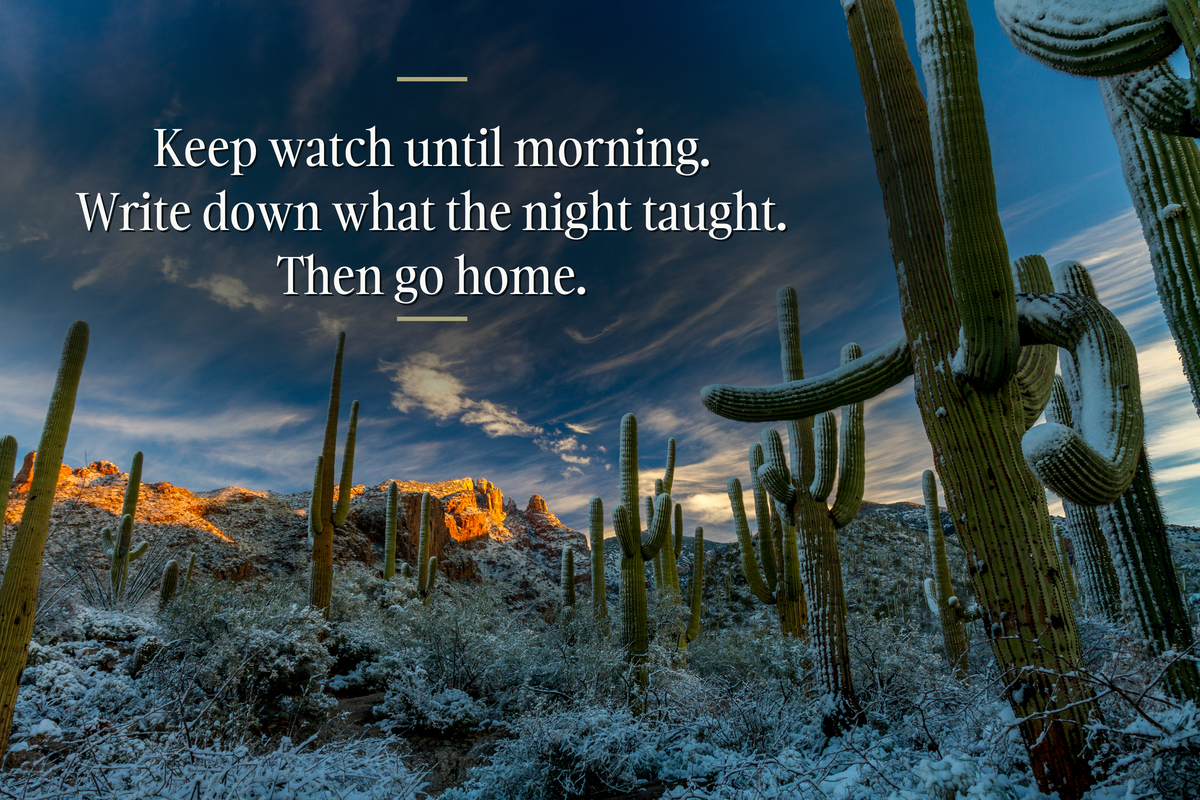
A vigil has a property most regulation lacks. It ends. You keep watch until dawn, and then you go home.
The Agency has begun releasing REMS programs. It released clozapine from its REMS in 2025, finding the blood-count paperwork no longer necessary. Read that as a structure finishing its work, the way a good vigil ends. The REMS statute writes the clock in, with assessments at eighteen months, three years and seven.
The safety framework, then, writes in its own ending. Say on the first page what evidence would retire each requirement. A vigil without a dawn is not a vigil. It is a siege.
Step back, and the arc runs longer than any docket. The researchers at Johns Hopkins and NYU who reopened this door, the elders who held it open while it was illegal, the harm reduction workers who taught governments to stop looking away. A field does not climb in a straight line. It spirals, circling the same questions with better answers each pass. I trust the spiral more than any one of us.
The docket takes anyone's two hundred words.
Arizona, October 02026.
Before You Go
If any of this landed on a bruise, go slowly tonight. In the United States, call 988.
The hearing is over. The box is not.
Name your seat. For example: I am a nurse who sat with people through this and could not bill for it.
Write two hundred words. One story, one ask.
File by 11:59 p.m. Eastern, Monday 5 October, to docket FDA-2026-N-7542.
Name the element you would change. A reviewer can act on a clause.
Agreement is weather. A named clause is record.
Post 37, the account of the hearing, sits beside this one as its companion, and this page will keep changing after the docket closes. If you are the one walking into the room, my free Ceremony Readiness Guide, my Ethics and Safety Commitments and Choosing a Psychedelic Guide hold the same standard from the seeker's chair. Send this to whoever runs a room.
Next, this standard leaves the page. October takes me into three rooms: women facilitators taking turns being the guided, a week of body, consent and the sacred with no psychedelics at all, and the first retreat of a circle learning to hold one another. The next three letters come from those rooms, with every name left at the door. What held, what bent, and what the standard missed. Guides rarely show their work. I am about to show mine.
Most of my own work lives “After Dawn”, in the months where a night becomes a life. That is the coaching. If it is not a fit, find a guide, a circle or a therapist, so you are not carrying what the night showed you alone.
Questions to Sit With
Who stayed awake for you when you could not?
Where are you monitoring someone you could be keeping vigil with?
What would you agree to have checked, if you wrote the check yourself?
From my Heart to yours,
Yeshua Adonai
Psychedelic Guide
Yeshua is a trauma-informed psychedelic guide, integration coach, and writer. A Marine Corps combat veteran, former diplomat, and mental health executive, he serves sacred mushroom and MDMA ceremonies, integrates ketamine treatment in clinics, supports clinical trials, advises policymakers and organizations, and mentors new guides while building technology for the field. He lives in Scottsdale, Arizona, keeps an office in Gilbert, and travels the country, including monthly to communities around Portland, Maine. Most of his work is remote. He counts himself a fellow traveler, still learning to trust his own experience. Posts arrive every other Monday at aboutyeshua.com.
Take a breath here. The rest is reference, and it is meant to be read out of order.
Frequently Asked Questions
A note on what follows. These answers hold the evidence behind the standard: how it meets the FDA's four questions, who else has written one, what the state programs require, the safety record so far, the strongest case against it and what it still lacks. Then where to start reading. Skip to what you need.
-
No. A REMS, a Risk Evaluation and Mitigation Strategy, is submitted by the company holding the drug application, for one product, and only the Agency may require its elements under 21 U.S.C. 355-1. Writing one is not my role. This framework is the floor beneath any product, written for the rooms a REMS cannot reach, and any company drafting a REMS is welcome to borrow from it: spiritual care as a named competency, follow-up contact on a fixed cadence, a sober trained facilitator present throughout, couples and groups of twelve at most with one facilitator for every three, harm reduction standing in daylight with the Substance Abuse and Mental Health Services Administration, the Drug Enforcement Administration and the states, and a participant record held under withdrawable consent.
-
All four areas in the Agency's hearing notice, answered through the five elements, with the sacred brought back in where the notice allows it, as patient safety. Training and credentialing sit in the section "The Ones Who Keep Vigil" above: curricula the states have already set, competence rated against a published bar, training and supervised hours rather than a license for the facilitator, licensed clinicians where screening needs them, and consultation that holds the guide. Patient safety runs through "Through the Night" and "After Dawn": a sober facilitator present throughout, a second person for those who need one, a session length tied to the dose, consent that names the guide's power, a hard night and touch, a discharge and transport plan, a stability check, two follow-up contacts, and a complaint channel for practitioners who cross a line. Access is the argument of "The Room": no list of approved buildings, groups and couples welcome, follow-up by phone where travel is hard, and a standard phased in where shortage areas run deepest. Data is "A Record Worth Trusting": adverse events found by asking rather than waiting, free validated measures as common elements, and a distributed design like the Agency's Sentinel that returns answers without a central list of names. Screening, care coordination with primary care, diversion and reporting are answered in "The Minimum Standard on One Page". Still open, and named here so no one has to look: coverage and payment, and controlled evidence that any of this prevents harm.
-
Several bodies, and this framework borrows from each rather than competing with them. The Agency's own final guidance asks trials for two monitors for the duration of the session, a licensed lead and an assistant with a nursing or bachelor's degree, and sets no discharge or follow-up protocol. The MAPS treatment manual went further, with daily telephone contact for up to a week after each session, so the trial standard is stronger than anything yet written for care after approval. Approval should not lower the floor. The field's own practice guidelines from APPA and BrainFutures were written to expire after two years and lapsed in August 2025, and the Banbury consensus set twenty ethical points across five domains, from informed consent to touch, as guidance rather than rule. A framework is where those pieces meet in one document a room can attest to. It is also written for the ones who had no seat at the podium. No insurer, no state program regulator, no chaplaincy body and no tribe spoke at the hearing, though the congressional PATH Caucus wrote that Indigenous and traditional knowledge systems include sophisticated systems of care and delivery, not solely knowledge about particular substances.
-
Each wrote its own floor, and they differ most on the days after. Oregon licenses facilitators with no clinical credential after 128 classroom hours and a forty-hour practicum, keeps one present throughout with visual and audio contact, bars video as a substitute, sets staffing by dose, from twenty-five clients per facilitator at the lowest doses, to four at 25 to 35 milligrams, and two at the highest, with groups capped at twenty-five, wants the state notified after any call to emergency services, and within seventy-two hours requires only an attempt to contact the client with information on integration. Colorado asks 150 hours of instruction, a 40-hour practicum and basic life support certification, caps group sessions at four participants per facilitator, and sixty-four in all, requires a second facilitator or a recording for any session outside a healing center, wants a life-threatening or serious event reported within twenty-four hours, and bars a separate fee for the first integration session, but sets no timed follow-up. New Mexico's proposed rule, heard on 2 October 2026, asks the most of training, a hundred supervised hours with eighty of them in sessions across at least 14 patients, places its facilitators under a practitioner's direct supervision, staffs groups at one practitioner per 8 patients and one facilitator per 2, and wants adverse events reported within two days, and it too sets no follow-up timeframe. Three states, three floors, and none requires a second contact. The federal trials sat two monitors with every participant. Against those lines, one facilitator for every 3, in circles of 12 at most, sits in the middle, tighter than Colorado and lighter than New Mexico. Voices from the hearing and beyond point the same way. Jeremy Rudy of Sabba Collective asked the Agency to require demonstrated competence, not practice or training hours. The bipartisan Congressional PATH Caucus has called for tiered credentialing pathways open to licensed clinicians, trained facilitators, peer support practitioners and Indigenous experts. Chris Peskuski, a Marine veteran and Colorado-licensed facilitator, has shown how New Mexico's proposed rule asks eight hours of training of the physicians who approve each patient and more than two hundred of the counselors who sit with them. And in Nevada, a retired Navy SEAL named Jon Dalton told the panel nearly eighty-seven percent of the state sits in a shortage area.
-
Integration is clinical care in the weeks and months after a session, and the evidence that it improves outcomes does not exist yet. Ascertainment is finding out what happened. A validated questionnaire administered on the phone is ascertainment. Deliberately keeping the word integration out of the element is not evasion, it is scope: the Agency regulates drugs and the conditions of their use, and the moment a proposal asks it to require psychotherapy, the objection writes itself. The instruments can all be free: the PHQ-9 for depression, the GAD-7 for anxiety, the PCL-5 for post-traumatic stress from the Department of Veterans Affairs, and the WHO-5 for well-being. A per-patient license fee is a per-patient access barrier.
-
Not psychiatrists, and that is the point. Fireside Project runs a peer support line reporting 40,000 conversations and 700 trained volunteers, and its peer-reviewed evaluation with researchers at the University of California, San Francisco, and Mount Sinai found 65.9 percent of 848 surveyed callers reported de-escalation from distress. Heroic Hearts coaches its veterans before the retreat and for weeks after. New Mexico's proposed rule brings a non-clinician facilitator into the room itself, under a clinician's supervision. The workforce for a documented phone call with a free questionnaire exists already.
-
It is the opposite. Board certification requires a qualifying master's degree, four units of clinical pastoral education, faith-group endorsement and two thousand hours of experience, and the professional code forbids imposing a belief. Medicare has seated a counselor of this kind on the hospice team since 1983, and in August 2023 the Association of Professional Chaplains asked the Agency to name chaplains as leads, or at least assistant monitors in trials. The final guidance does not name them, though a third of those reporting extended difficulties after psychedelic use describe spiritual ones, and most of the training programs in a recent landscape study dedicate no curriculum to the subject. A 2026 paper in the Journal of Religion and Health set out five competency domains for chaplains in psychedelic care, and noted the Agency's 2023 draft guidance left them out. The ask here is smaller: availability on request, documented as offered, which a patient can decline at no cost.
-
Two, and they come from opposite directions. Laurel Kilgour of the Psychedelic Bar Association warned from the podium that an overly zealous risk framework pushes patients toward unregulated alternatives, which is a real cost and falls on the people with the least money. And Kevin Sabet of the Foundation for Drug Policy Solutions filed that the threshold question is not how to implement these therapies safely but whether the current evidence justifies implementing them at all. The access advocate and the prohibitionist are pointing at the same hole from opposite sides: harm outside the monitored window, to people outside the monitored system.
-
Said once, in one place, so a reviewer does not have to assemble it. No controlled evidence the central new element works: the two contacts are an ascertainment argument, and detection is not mitigation. No cost estimate, no peer review, and no accredited practitioner credential to point at, since the board founded for it has administered no examination and certified no candidate, which is why the first element judges rooms rather than people. No conversation yet with the chaplaincy profession whose credential I am leaning on, and that element needs a board-certified chaplain to tell me what I have got wrong. Several citations are named rather than buried: New Mexico's rule is still proposed, the oral remarks from the September hearing rest on trade accounts, and my own notes against the recording, and the ketamine integration estimate is mine, from my own clinic partners. I would rather hand that list over than have a reviewer assemble it and conclude I was hiding it.
-
Not in my experience, and I cannot prove it. I expect a single synthesized molecule to have a lower ceiling for healing than the whole mushroom. No trial has compared whole mushroom material against synthesized psilocybin in humans, for any indication, and the other alkaloids are not characterized well enough in clinical work to say what they add. My own evidence is a caseload that chose me, with no control group. That belief changes not one element, though, because every element here is about the person's care rather than the molecule.
-
Two records, both from Oregon, the one state to publish its numbers. The Oregon Health Authority's 2025 review counted 5,935 clients, 9 severe reactions ending in a trip to a hospital, and 13 calls to emergency services, about 2 in every 1,000 clients. An independent cohort from Oregon Health & Science University, published in August, followed 346 adults at 24 of the state's service centers for three months: 4 had a serious behavioral reaction, none had a serious physical event, and the risk of moderate-to-severe depression fell by more than half. Facilitators reported nothing for 2 of those 4, and the share calling the experience harmful rose from 1.6 percent at one week to 2.3 percent at three months. Rare harm, real harm, and most of it arrived after the person went home, which is the whole case for "After Dawn". Todd Korthuis, who led the study, put it plainly: "Safety was very similar to what we've seen with psychedelics in clinical settings."
-
If you are new to all of this, not this one: it assumes you know what a psychedelic session is like, so start with thresholds, on falling apart on purpose, or kaleidoscope, on what is actually happening inside a mushroom journey. If you are weighing whether to sit at all, Choosing a Psychedelic Guide and the free Ceremony Readiness Guide. If you came because of the weeks after, bedrock. If somebody you love is dying, cancer. If the medicine in question is ketamine, that one, and if it is heart medicine, that one. If you are carrying something you cannot say out loud, the three parts on shame start there. If you want the mechanism of change rather than the chemistry, hyparxis and self-remembering. If you want to talk with me about consciousness itself, nonlocal consciousness and the eight circuits. If you want the field as it looked from a conference room, the Harvard review. And if you want to know what preparation actually asks of a person, reset, vows and the Seekers Circle.
If the night goes somewhere and you want company for the longer work:
Book a Discovery Call. A complimentary conversation about where you are and whether any of this fits. No obligation.
Ceremony Readiness Guide. Free, and a good first step if a call feels like too much too soon.
Monthly Integration Circles. A room of support in the months after, together.
The Ceremony container. The full guided arc, preparation through integration.
Integration coaching. Six sessions across a season.
Seekers Circle. Six months, two retreats, bi-weekly group calls and an accountability partner. Opens once a year.
The archive. Thirty-eight letters and counting.
And if none of these fit, find your own people anyway. A guide, a circle, a therapist, a friend with a calendar. What I offer is company, discernment, and the willingness to stay.
Blog Archive
explore the growing library
-
After the War
- Nov 17, 2025 05 | 11.11: War After War A Veteran’s Battle to Heal
-
Consciousness
- Aug 24, 2026 35 | Beholding: How the Chapel of Sacred Mirrors Returns Your Gaze
- Jun 1, 2026 29 | Leary's Eight Circuits: A Map of Consciousness That Both Frees and Binds
- May 18, 2026 28 | Cancer: The Other Healer in the Room
- Apr 20, 2026 26 | Harvard's Last Psychedelic Intersections Conference: A Practitioner's Review
- Mar 30, 2026 24 | Nonlocal Consciousness: What The Secret of Secrets Reveals About the Nature of Mind
- Mar 23, 2026 23 | Self-Remembering: When the Self Sees Itself
- Mar 16, 2026 22 | Hyparxis: The Dimension Where Real Change Becomes Possible
- Mar 9, 2026 21 | Thresholds: A Psychedelic Guide to Falling Apart on Purpose
-
Finding Purpose
- Jul 13, 2026 32 | Vows: How a Tree Learns to Love the Wind
- Apr 6, 2026 25 | Reset: What Becomes Available When You Choose to Dissolve
- Jan 26, 2026 15 | Beyond Belief: Psychedelics and the Post-Religious Spiritual Path
- Jan 5, 2026 12 | Beginning Again: The Practice of Presence Over Performance
- Dec 1, 2025 07 | Finding Purpose in Midlife: How to Regain Meaning
- Nov 24, 2025 06 | Unlock Leadership Potential With Psychedelic Coaching
-
Psychedelic Path
- Oct 5, 2026 38 | Vigil: A Safety Framework for Psychedelic Care
- Sep 21, 2026 37 | FDA public hearing: The Day the Sacred Was Ruled “Out of Scope”
- Aug 10, 2026 34 | Kaleidoscope: What Is Actually Happening Inside a Mushroom Journey
- Jun 29, 2026 31 | MDMA: Heart Medicine and the Oldest Name for God
- Jun 15, 2026 30 | Ketamine: The Mirror Molecule That Was Always Asking for a Witness
- Jan 19, 2026 14 | Microdosing Magic Mushrooms: A Guide to What Actually Works
- Dec 22, 2025 10 | From Darkness Into Light: Living the Insight
- Nov 3, 2025 03 | Ketamine Therapy Near Me: A Legal Pathway for Psychedelics
- Oct 27, 2025 02 | Arizona’s Psychedelic Awakening: Where Science Meets Soul
- Oct 20, 2025 01 | My Psychedelic Journey: A Path Through the Fog of Depression
-
Sacred Ceremony
- May 4, 2026 27 | Seekers Circle 25-26': Where Preparation Becomes Integration
- Feb 2, 2026 16 | Choosing a Psychedelic Guide: Questions Your Life Depends On
- Jan 12, 2026 13 | Psychedelic Preparation: The Work That Begins Before Ceremony
- Nov 10, 2025 04 | Magic Mushrooms: Remembering the Sacred Intelligence of Nature
-
Shadow Work
- Jul 27, 2026 33 | Bend: A Reckoning with the Feminine
- Mar 2, 2026 20 | The Shame Addiction: What the Body Learns (Part 3 of 3)
- Feb 23, 2026 19 | The Shame Addiction: What the Body Hides (Part 2 of 3)
- Feb 16, 2026 18 | The Shame Addiction: What the Body Carries (Part 1 of 3)
- Feb 9, 2026 17 | Stop Trying to Forgive: What Psilocybin and Grief Teach About Letting Go
- Dec 15, 2025 09 | Grief and the Path Back to Ourselves (part 2 of 2)
- Dec 8, 2025 08 | Grief and the Path Back to Ourselves (part 1 of 2)
- Tools for Integration
trending topics
- psilocybin
- psychedelic integration
- harm reduction
- psychedelic guide
- Arizona
- psychedelics
- integration
- transformation
- veterans healing
- Fourth Way
- Long Now
- PTSD
- integration coaching
- letting go
- mental health
- nature
- neuroplasticity
- presence
- psychedelic preparation
- recovery
- self-awareness
- FDA psychedelic hearing
- FDA public hearing 2026
- Gurdjieff
- MDMA-assisted therapy
- Oregon psilocybin
- REMS
- White Oak
- addiction
- alternative treatment
- becoming
- burnout
- chaplaincy
- combat veteran
- consciousness
- default mode network
- depression
- docket FDA-2026-N-7542
- emotional healing
- ethics
- grief
- guide selection
- ketamine clinics
- ketamine therapy
- legal
- loss
- magic mushrooms
- masculine and feminine
- mast year
- mindfulness